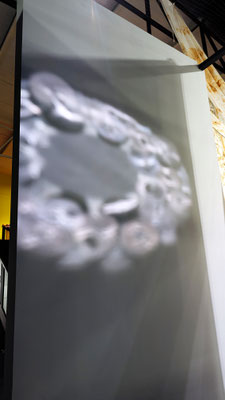
A FOURTH TIGER 2025
A residency project at NY20Plus for the International Upcycle Art Festival in Chengdu, China.

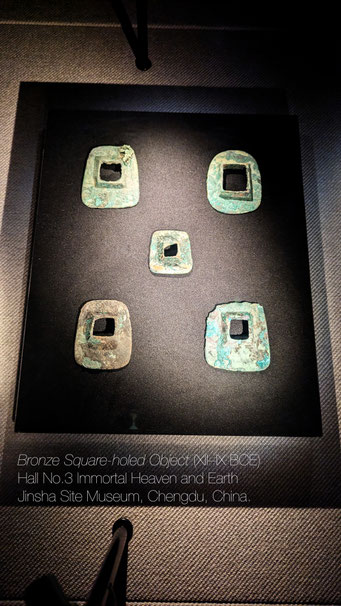
The work refers to the bi (Chinese 璧), a usually jade disc pierced with a central hole and used for ritual or decorative purposes. The making of bi dates back at least to the Liangzhu culture (3300–2000 BCE) and continued for several millennia, up until the Han dynasty. Neolithic bi discs were undecorated, while those from later periods, such as the Zhou dynasty, display far more elaborate surfaces, carved in relief with motifs representing deities associated with the sky, as well as qualities or powers that the bearer of the disc sought to invoke or embody.
The bi thus appears as an object of memory, a device for storing information: explicitly in later periods, through inscriptions and engraved images, and more speculatively in earlier times, when the object served as the focus of oral or performative rituals before being offered.
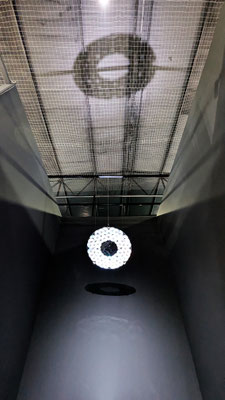
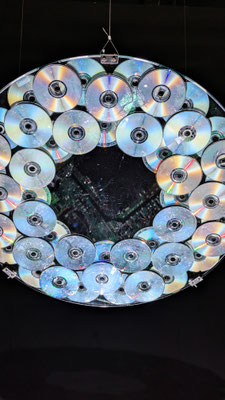
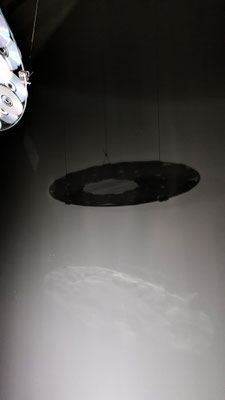
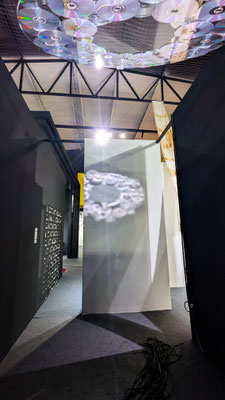
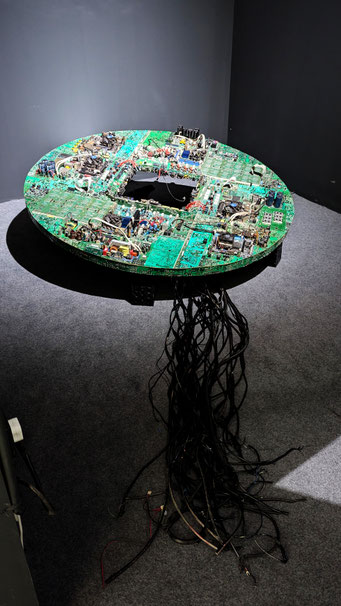
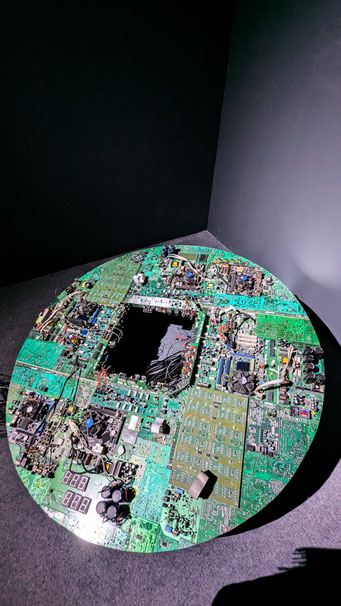
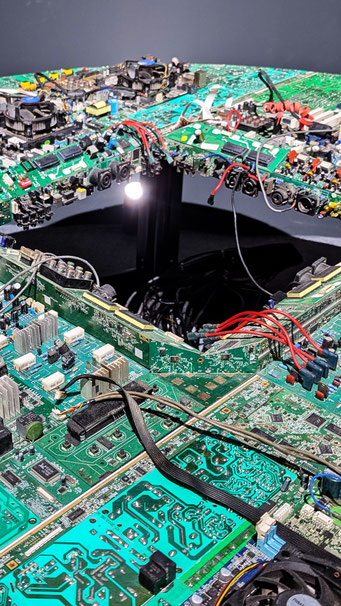
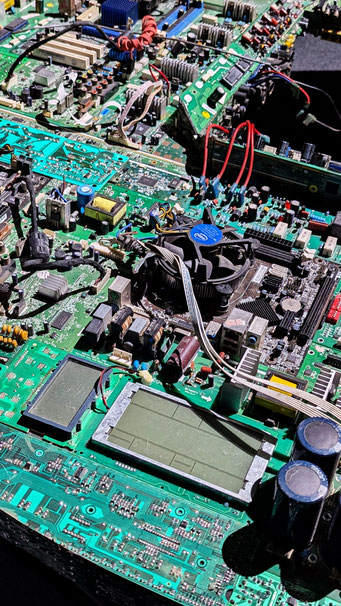
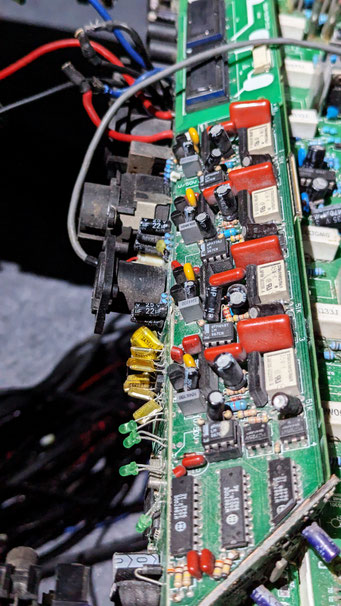
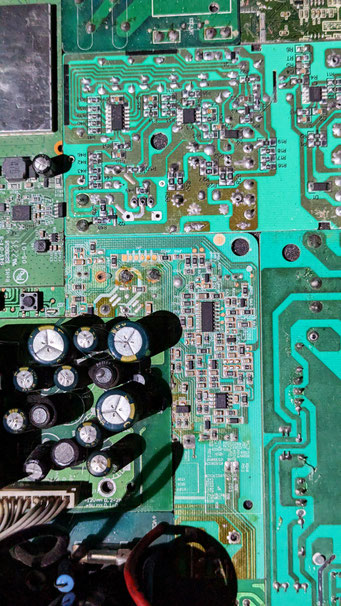
A Fourth Tiger draws a parallel between the bi and modern storage technologies such as the CD-ROM or the printed circuit: similar in shape, minimalist and polished, both fulfill a function of storage and mediation within very different temporal contexts. Whereas the bi served to transmit information to divine forces and cosmic entities, the CD-ROM and flash drives perform this function of transmission between humans. CD-ROMs and printed circuits are also subject to a kind of ritual, whether in their complex production processes or in the act of burning, which requires a machine into which they are inserted and a specific language for encoding information.
The title refers to the work of philosopher Yuk Hui, in connection with a text titled “2 or 3 Tigers”, which explores the relationship between technology and symbolism, particularly in the context of modernization and the challenges of globalization. The phrase likely derives from his reflections on the loss of symbolic meaning in a technological world and the attempt to preserve symbolic values through digital means. The following two artistic proposals aim to materialize this line of thought.

“A Fourth Tiger: Earth”, 2025
Printed circuit boards and industrial glue on wood,
150x150x6 cm.





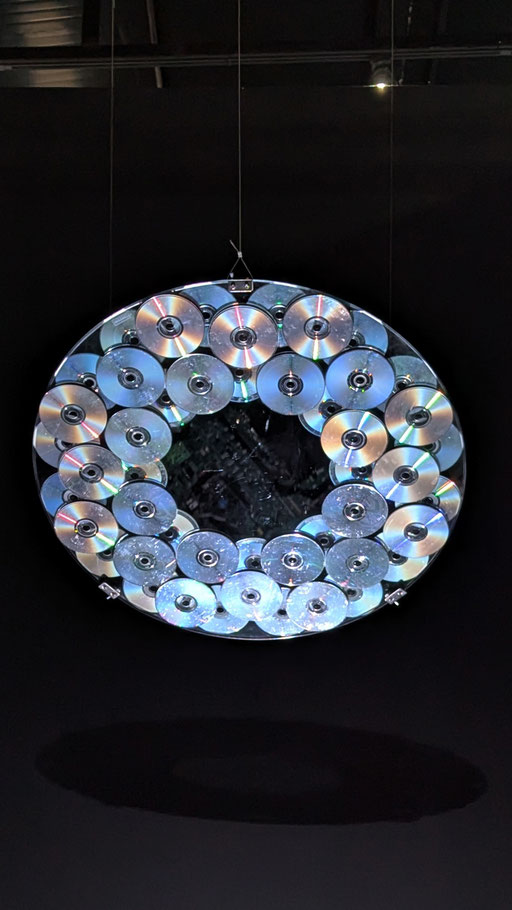
“A Fourth Tiger: Sky”, 2025
CD-ROMs and industrial adhesive on glass,
77x77x2 cm.